
McCormick Criminal Court Records
A criminal court record is the court file that opens once a criminal matter is filed in court. In McCormick County, more serious criminal matters are heard in General Sessions, the criminal division of South Carolina Circuit Court. The McCormick County Clerk of Court keeps General Sessions criminal case records and collects fines and fees from General Sessions. Summary criminal, traffic, bond, warrant, and preliminary-hearing matters may begin in Magistrate Court.
McCormick County is part of the Eleventh Judicial Circuit with Edgefield, Lexington, and Saluda counties. South Carolina uses the term Solicitor, not District Attorney. The Eleventh Circuit Solicitor prosecutes General Sessions cases, juvenile matters, and certain Magistrate Court criminal charges. The Solicitor defines General Sessions as crimes carrying more than 30 days in jail and/or more than $1,000 in fines, while Magistrate Court matters are misdemeanors up to 30 days and/or fines up to $1,000.
The Eleventh Circuit Solicitor homepage is a source for the prosecution role in McCormick County criminal court records.
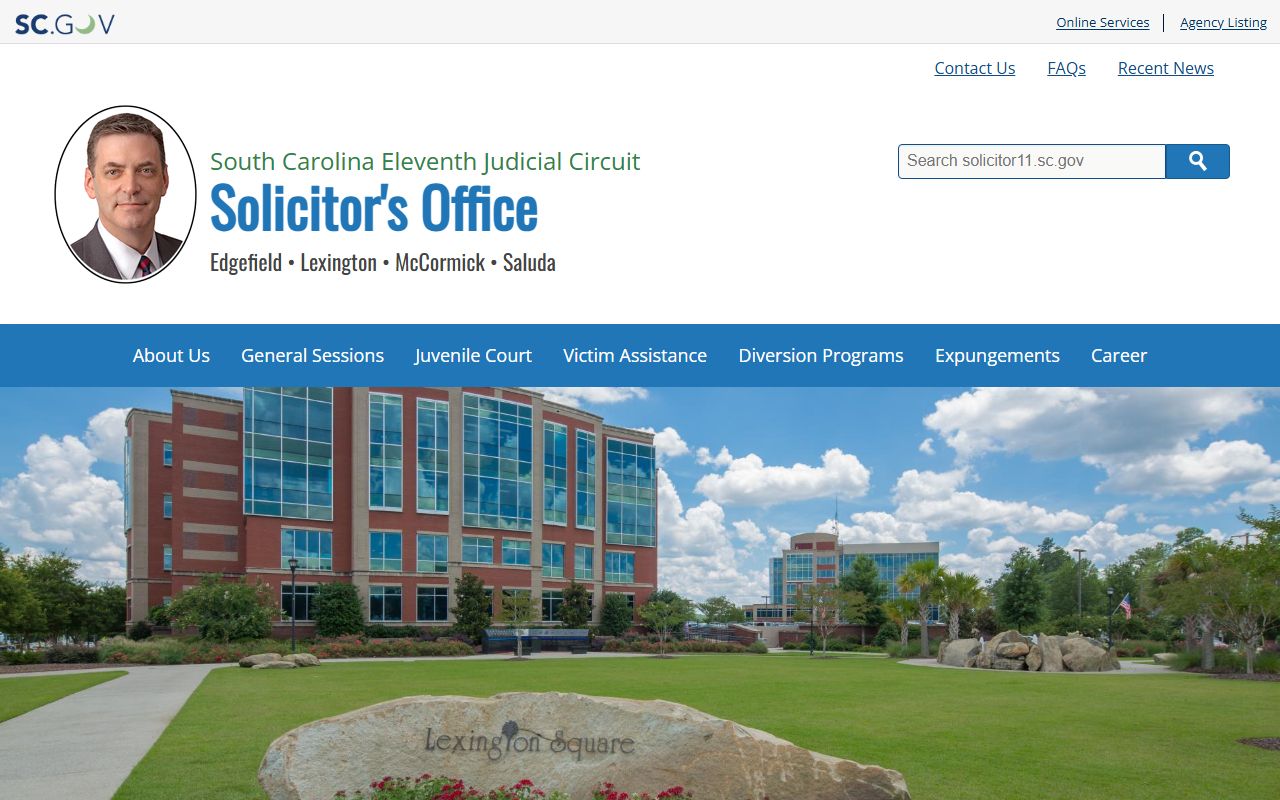
That role matters because the Solicitor reviews and prosecutes many charges that later appear in the General Sessions criminal case file.
Search McCormick Criminal Cases
The official search path starts with the South Carolina Judicial Branch Case Records Search and the direct McCormick Public Index. Public Index is the trial and summary court case search route where available. Use all McCormick court records for civil, family, probate, and other record categories, and use court charge records after arrest for the narrower charge-status path.
- Open the South Carolina Judicial Branch case-record search page.
- Select McCormick County and open the Public Index link.
- Search by the available case or party information shown in the live portal.
- Open the case detail and review docket entries, charge information, disposition, and sentence where displayed.
- Request certified copies from the McCormick County Clerk of Court if an official copy is needed.
The research did not capture exact Public Index inner fields or sample case columns. Use only what the live portal displays, then verify unclear information with the Clerk. For active warrants, use McCormick County warrant records. For current custody, use McCormick County inmate records.
Stages of a Criminal Case
A McCormick County criminal court record changes as the case moves through the court. Early entries may show the charging document, bond, preliminary events, or transfer from summary court. Later entries may show arraignment, motions, hearings, plea negotiations, trial settings, verdicts, sentencing, probation, restitution, fines, and post-judgment events.
Case flow: Charges Filed › Arraignment › Pretrial / Motions › Plea or Trial › Disposition › Sentencing
| Stage | What Happens |
|---|---|
| Charges filed | The accusation enters court by complaint, warrant-related filing, information, indictment, or other charging document. |
| Arraignment | The charge is formally presented and the defendant may enter a plea. |
| Pretrial / motions | Attorneys file requests, challenge issues, seek discovery, or ask the court for rulings before plea or trial. |
| Plea or trial | The case resolves by plea, bench or jury trial, dismissal, nolle prosequi, or another outcome. |
| Sentencing | If there is a conviction or plea, the record may show jail/prison time, probation, fines, costs, or restitution. |
The Solicitor's about page explains the Eleventh Circuit jurisdiction and office role.
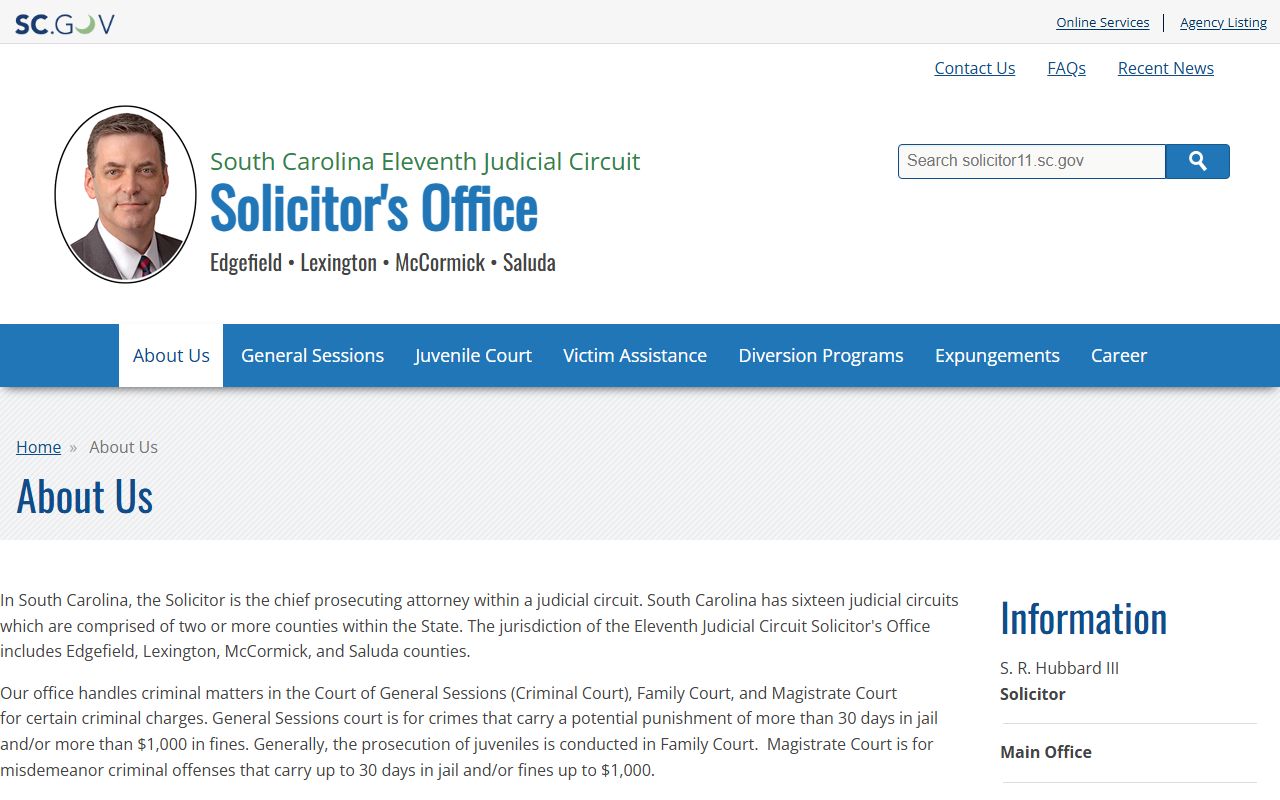
That circuit-wide prosecution structure explains why some McCormick County criminal court questions route to Lexington-area Solicitor offices while the court file remains local with the Clerk.
What McCormick Criminal Records Show
Criminal court records may show the case number, court division, county, filing date, defendant name, attorney names, judge, charge description, statute number, CDR code, bond terms, plea, docket events, disposition, sentence, probation, restitution, fines, court costs, payments, balances, and appeal notices. The exact Public Index sample fields were not captured, so this table is a researched inventory of likely public-facing data, not a transcript of a sample case page.
| Field | What It Shows |
|---|---|
| Case number | The criminal case identifier used by the court and Clerk. |
| Defendant | The person charged in the criminal case, where public. |
| Charges | Offense descriptions, statute references, or CDR codes tied to the filed case. |
| Bond | Bond type, amount, or conditions when displayed. |
| Plea | The defendant's formal response, such as guilty, not guilty, or nolo contendere. |
| Disposition | The result of the case or charge, including guilty, dismissed, not guilty, or nolle prosequi. |
| Sentence | Jail/prison time, probation, fines, costs, restitution, or other court-ordered terms. |
The South Carolina Judicial Branch CDR Codes page is the official source for charge and offense code lookup.
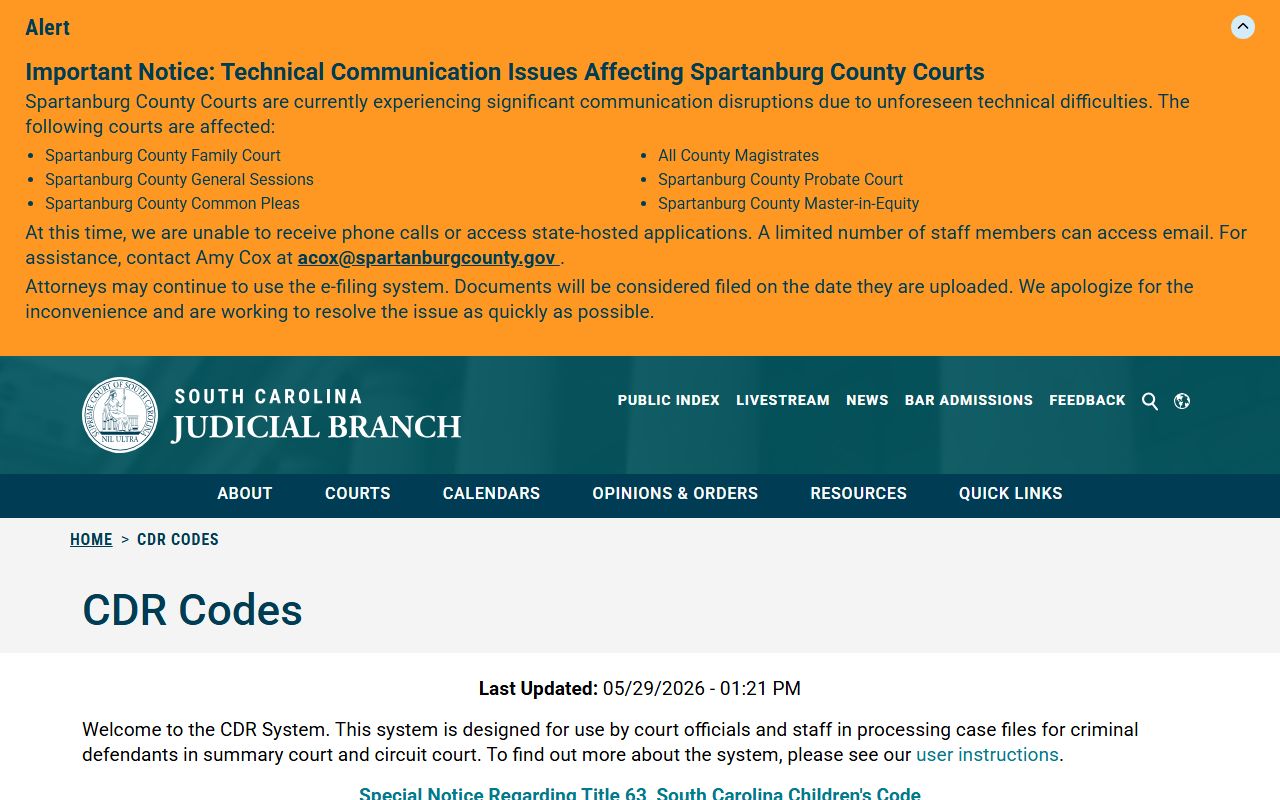
CDR Codes can help interpret a criminal charge in a McCormick County record, but the code tool does not replace the court case file.
Charges vs Convictions
A charge is an accusation filed in court. A conviction is a formal finding of guilt after a guilty plea, trial verdict, or other qualifying result. A McCormick County criminal court record can contain charges that were later dismissed, reduced, nolle prossed, transferred, or ended in a not-guilty finding. For that reason, the charge list should not be read as a conviction list.
| Charge | Conviction | |
|---|---|---|
| Stage | Accusation after arrest, citation, warrant, or prosecutor review | Final finding of guilt or plea accepted by the court |
| Record meaning | Shows what was alleged or filed | Shows the legal outcome on that charge |
| Can change? | May be amended, reduced, dismissed, or nolle prossed | May be appealed, modified, or later affected by expungement where eligible |
Read Dispositions and Sentences
Disposition terms carry the strongest meaning in a criminal case record. Pending means the case remains open. Disposed means the court entered a final result. Dismissed means the case or charge ended without a conviction. Nolle prosequi, often shortened to nolle prossed, means the Solicitor declined to prosecute further. Guilty means a conviction was entered, while not guilty means an acquittal or not-guilty finding.
A sentence may include jail or prison time, probation, restitution, fines, court costs, payment terms, or special conditions. Some records also show bond terms, balances, and payment status. If the sentence is unclear or a certified copy is needed, contact the McCormick County Clerk of Court rather than relying on a summary docket line.
Some criminal records also show the difference between the court's result and later custody status. A sentence may place a person in county custody, state prison, probation, or another supervision status. The court record explains what the judge ordered. A jail or prison search explains where the person is held now, if that information is public and available.
Sealed vs Expunged Records
Sealing and expungement are different. A sealed record is restricted from ordinary public view, often by court order or rule. An expunged record has been destroyed, sealed, or removed from public access under an expungement order where the law allows it. The Eleventh Circuit Solicitor says an expungement may also be called an Order for Destruction of Arrest Records.
| Sealed | Expunged | |
|---|---|---|
| Visibility | Hidden from ordinary public access | Removed, sealed, or destroyed under an order where eligible |
| Who handles it | The court controls sealed court material | The Solicitor handles many eligible criminal expungement applications |
| Eligibility | Depends on statute, court rule, case type, and order | Depends on charge, disposition, prior record, waiting period, and court type |
The Eleventh Circuit Solicitor expungement page is the official process source for many McCormick criminal expungements.
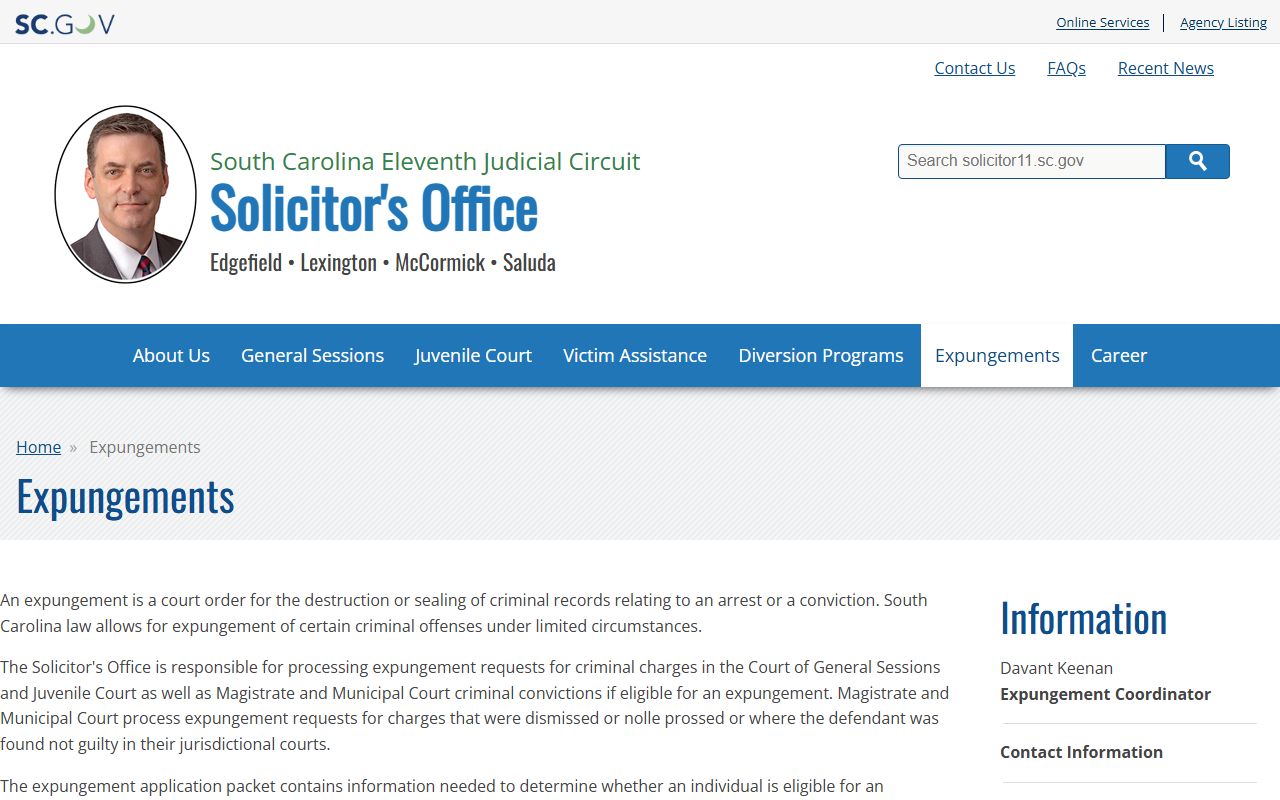
Expungement applications must be made in the county where the arrest occurred, and eligibility should not be assumed from the case title alone.
Public Access to Criminal Records
S.C. Code Section 30-4-30 supports inspection or copying of public records unless an exemption or other law applies. S.C. Code Section 30-4-40 allows redaction or withholding of exempt material, including privacy-sensitive and some law-enforcement records. Court access also depends on Judicial Branch rules, juvenile confidentiality laws, sealing orders, and expungement statutes.
Key Statutes:
S.C. Code Section 17-22-910 covers solicitor-administered expungement applications for listed criminal records.
S.C. Code Sections 63-19-2010 and 63-19-2020 make juvenile court records confidential except as authorized.
Background Check Considerations
SLED CATCH is South Carolina's name-based criminal-history search, but it is separate from a McCormick County court case file. It does not include wanted-person information and does not check the sex offender registry. Court records show case activity and outcomes in the court system, while a criminal-history report is a state law-enforcement product with its own rules and limits.
Important: Court lookups are not FCRA consumer reports and should not be used for FCRA-regulated screening decisions.
Restricted McCormick Criminal Records
Juvenile records, sealed cases, expunged records, adoption or family-related criminal-adjacent matters, and filings with private identifiers are restricted. Rule 41.2 requires redaction of personal identifying information. The Public Index notice also says home address information will no longer display as of January 1, 2026. Ongoing investigations and law-enforcement records may also be limited under FOIA exemptions.
The McCormick public defender listing is a source for local defense contact information.
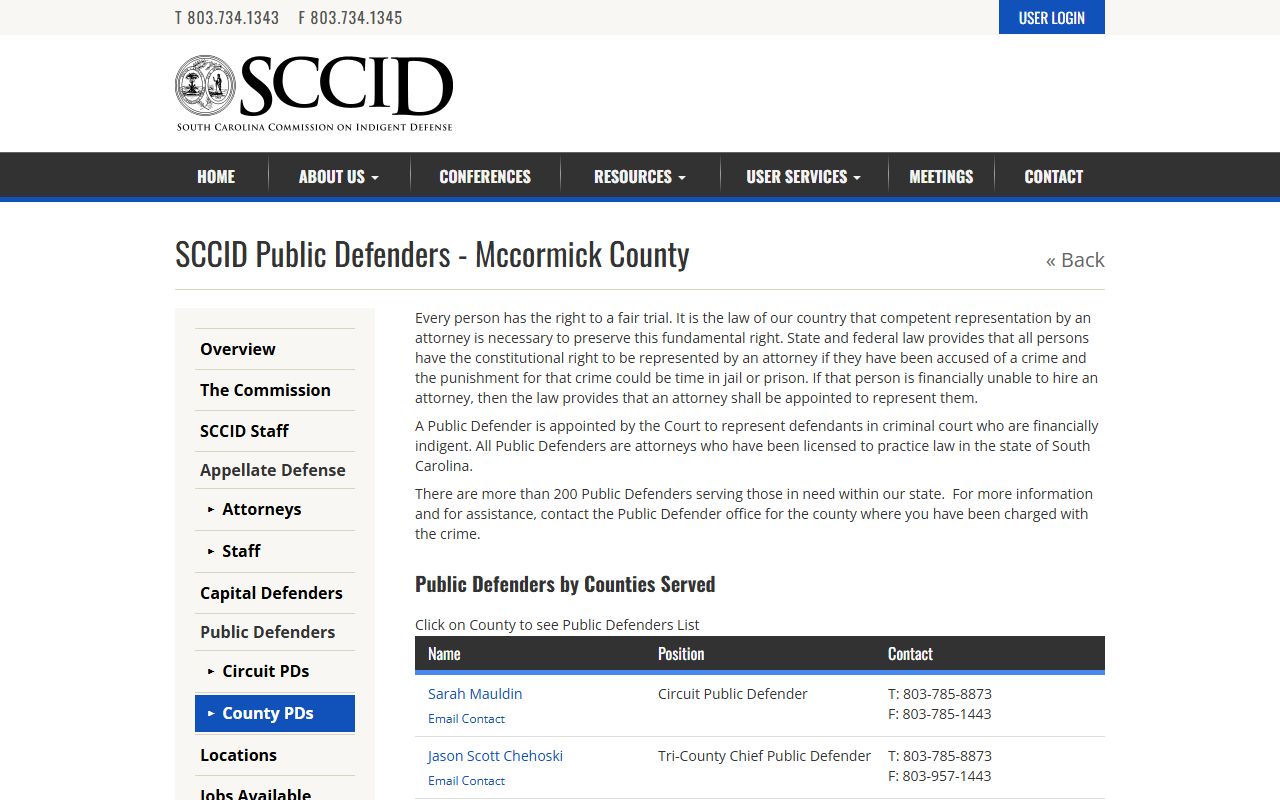
The public defender office handles appointed defense for eligible defendants, but it is not the record custodian for General Sessions files.
For record access, the final routing rule is simple: the Clerk keeps the court case file, the Solicitor handles prosecution and many expungement requests, the public defender represents eligible defendants, and SLED handles statewide criminal-history products. Mixing those offices can delay a request.